[:fr]
Biaufond est un lieu surprenant. A la fois, il s’agit d’un endroit idyllique réputé comme destination de promenade en été et ce, depuis des années. En même temps, il s’agit d’un lieu chargé d’histoire et qui a connu des moments inhabituels lors de la dernière guerre.
De plus, beaucoup de gens ignorent qu’après la création du canton du Jura en 1978, la frontière commune entre ce canton et le canton de Neuchâtel, ne représente qu’une distance de 250m. Cette frontière commune représente un tout petit tronçon entre le canton de Berne et la France. Si l’on se trouve à Biaufond et qu’on regarde par-delà le lac homonyme, on remarquera une borne frontière se trouvant au milieu de l’eau. Cette borne marque la frontière et la France et la Suisse. Pourquoi se trouve-t-elle au milieu de l’eau ? Il faut remonter dans le temps (au début du XXème siècle) pour constater que la construction du barrage du Refrain, inauguré en 1909, a passablement changé l’aspect du Doubs à cet endroit. En effet, là où se trouve actuellement le Lac de Biaufond, cette rivière coulait quelques 10m plus bas que le niveau de l’eau actuel.
Biaufond se trouve également au bout de la combe homonyme qui n’est rien d’autre que la vallée qu’avait creusée la Ronde, le ruisseau s’écoulant depuis La Chaux-de-Fonds. Il faut utiliser l’imparfait car, même s’il est certain que c’est ce ruisseau qui avait creusé ce vallon, le cheminement actuel de l’eau n’est pas clairement établi. Quelques essais de coloration avaient été effectués au milieu du siècle passé, mais avec des résultats contradictoires.
Un sentier parcourt la Combe de Biaufond. Celui-ci est, contrairement aux sentiers de la région, balisé comme sentier de montagne (donc en blanc-rouge-blanc). De plus, à chaque bout du sentier de la Combe de Biaufond, un panneau de mise en garde a été apposé appelant à la prudence. Il y est également précisé que le cheminement est réservé aux personnes exemptes de vertige. Même si la mise en garde peut sembler exagérée, elle prend tout son sens en considérant que la plupart des autres sentiers environnants sont des chemins pédestres ne nécessitant pas de compétences particulières. Il est donc compréhensible que l’on cherche à éviter que des pratiquants peu expérimentés ne s’aventurent sur ce sentier.
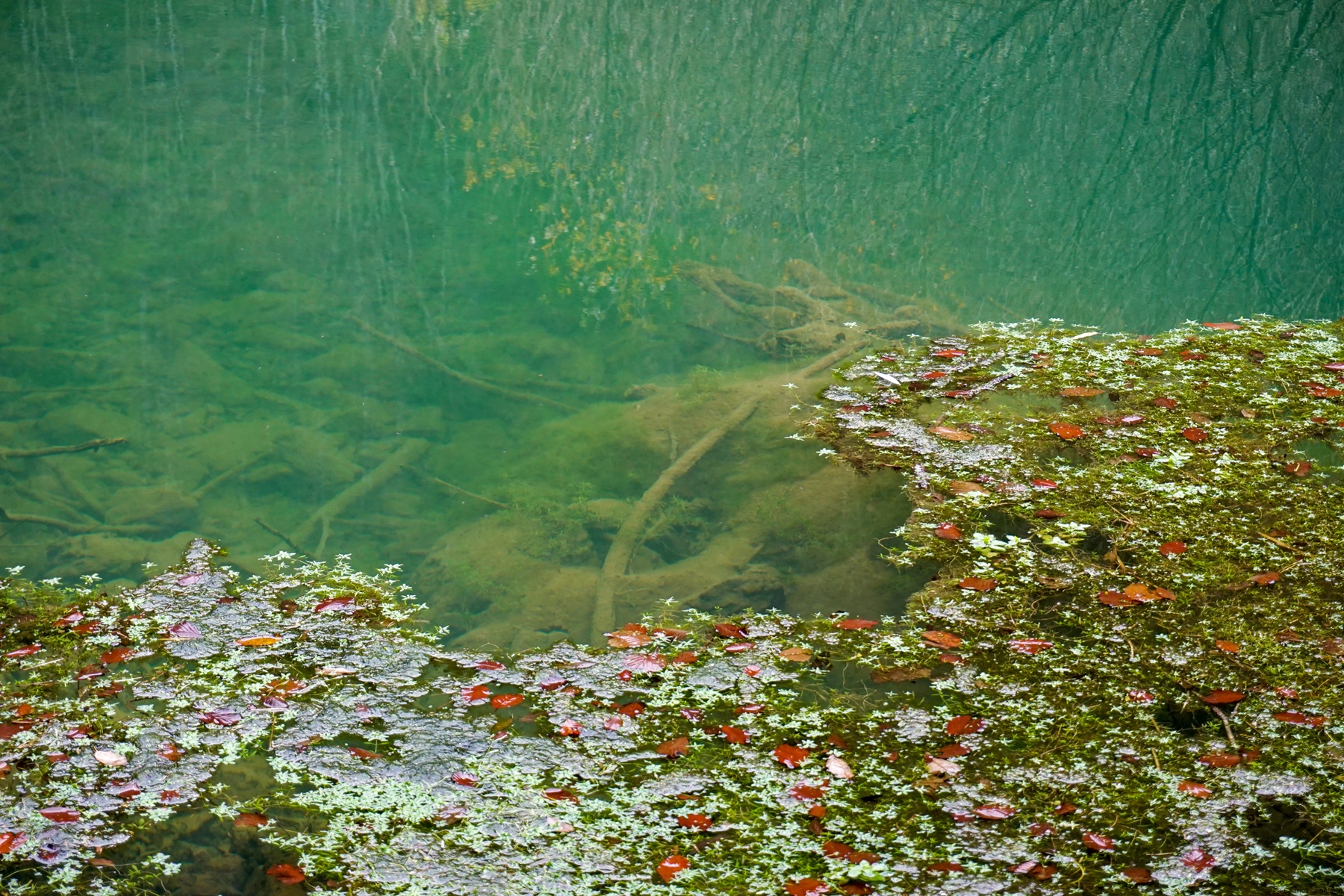
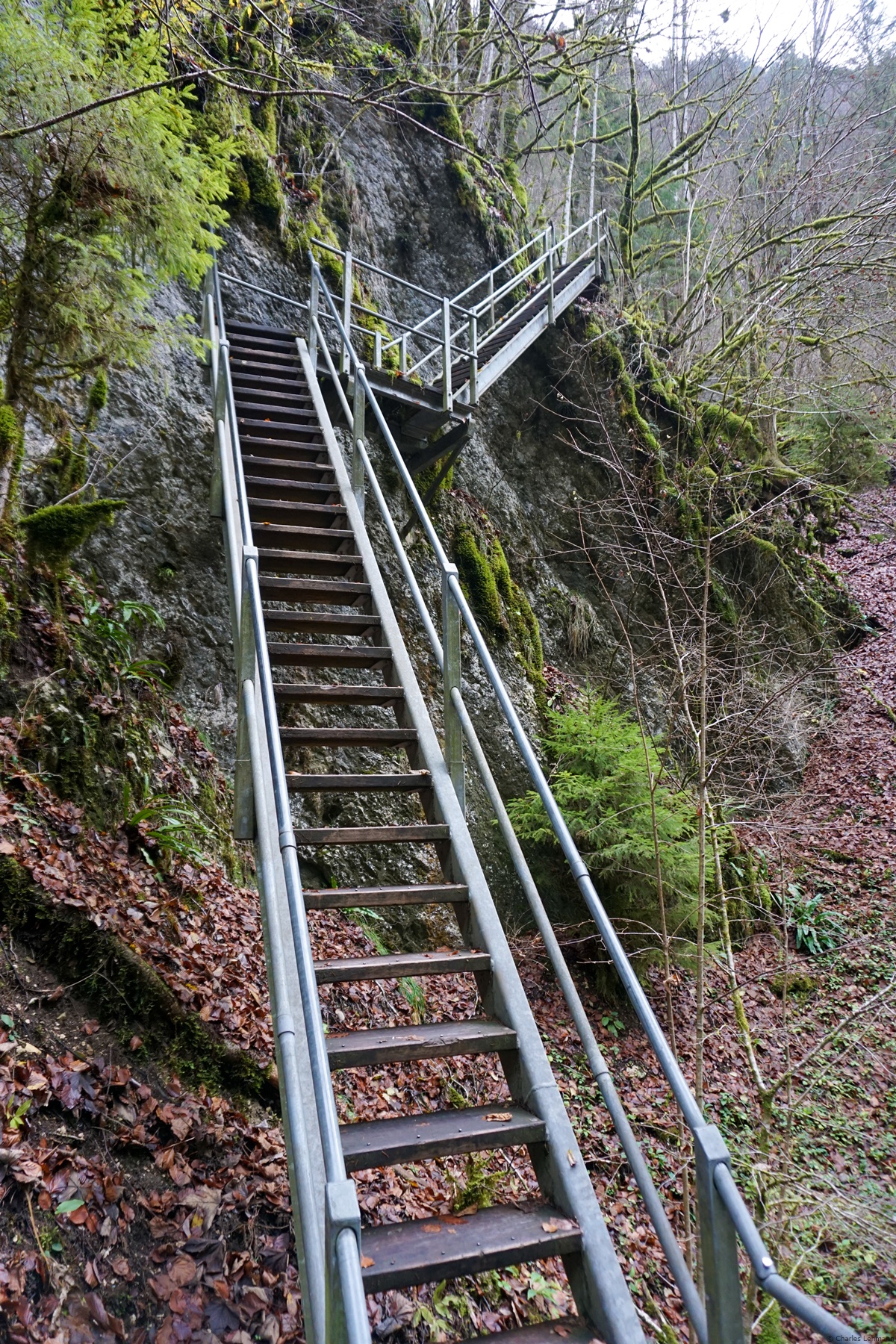
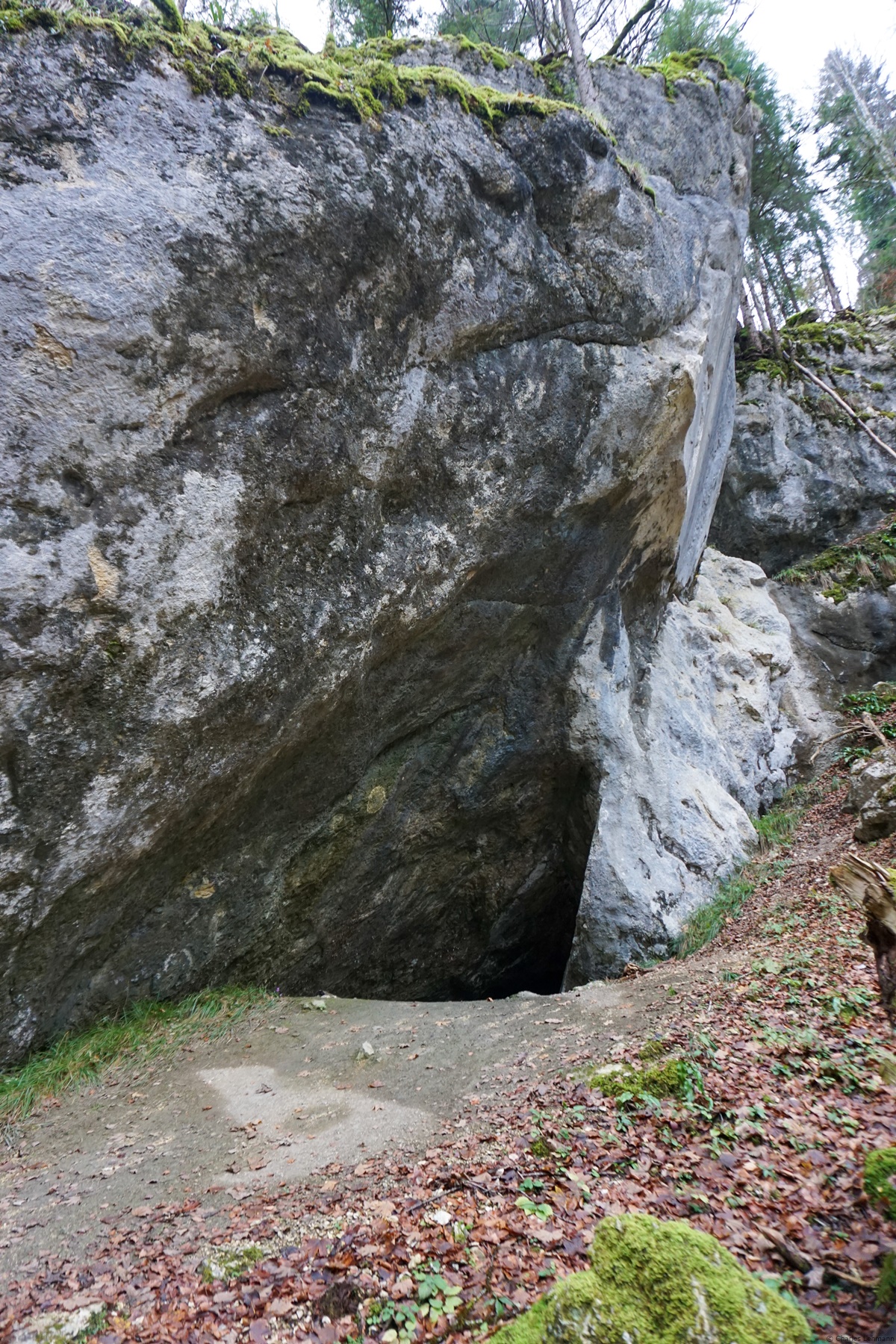
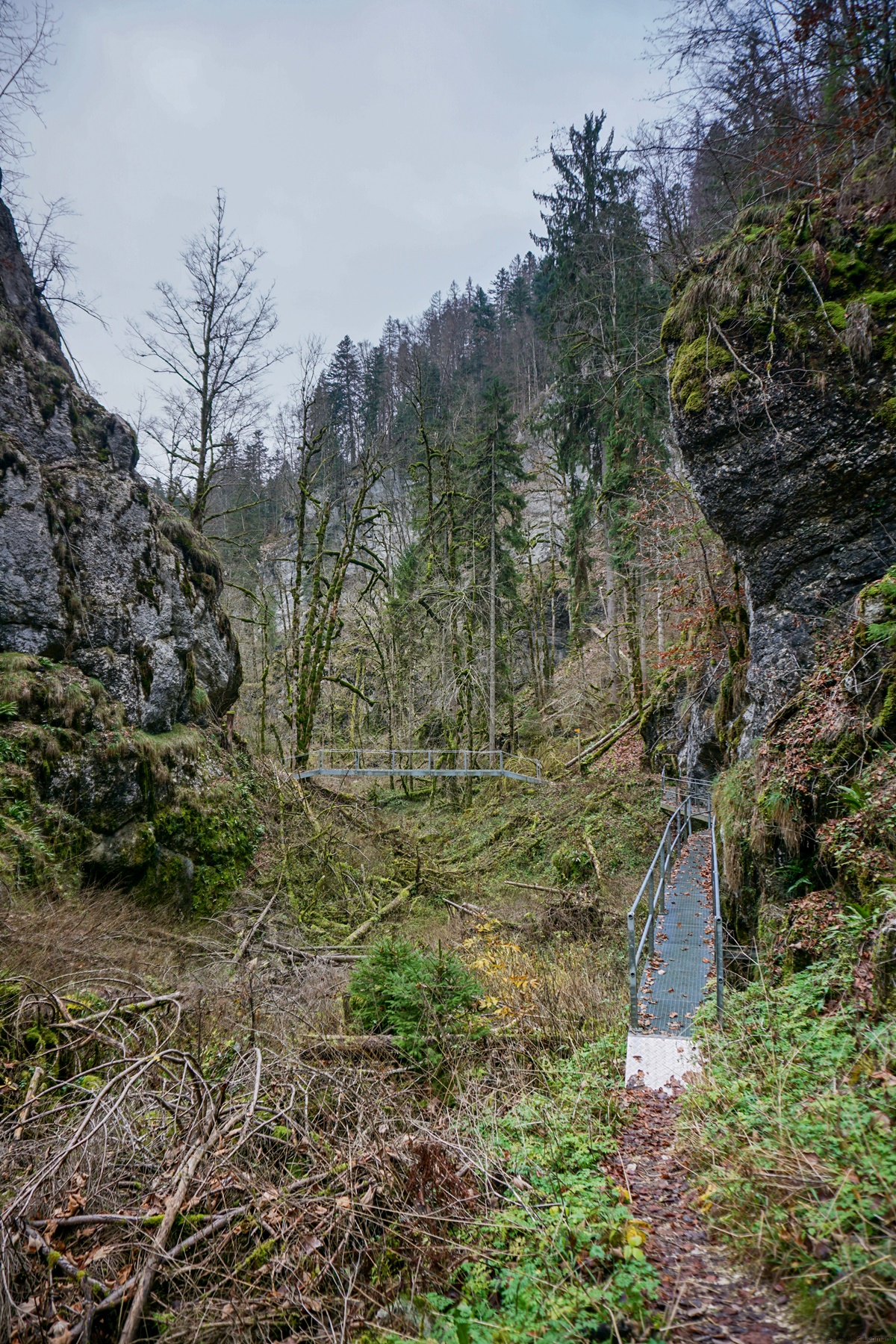
Au départ de Biaufond, le sentier de la Combe de Biaufond côtoie un bout la Ronde, qui au débouché sur le Lac de Biaufond, forme un petit plan d’eau. Le sentier, au début, ne présente pas d’accident de terrain marqué. Ce n’est que lorsque la gorge change de direction que l’on se retrouve face à quelques échelles et ponts permettant de surmonter le premier verrou. A partir de cet endroit, le sentier devient un peu plus accidenté, change de rive du vallon et monte en direction d’une grotte dont la voûte d’entrée se voit de loin. Après la grotte, on change encore une fois de rive avant d’atteindre une section d’apparence très dévastée de la gorge. On y trouve des arbres abattus et des blocs de rocher entassés pêle-mêle et il est difficile de saisir si le ravage est la conséquence d’un éboulement ou si, au contraire, des arbres ont été abattus, ce qui a favorisé l’érosion. Après deux petits ponts et un changement de rive, on atteint une cuvette de laquelle on voit clairement la suite : de grandes échelles permettant de sortir de la gorge.
La sortie de la gorge par les échelles est rendue nécessaire car, plus haut, un éboulement ancien a complètement dévasté le vallon. C’est cet éboulement qui est à l’origine du plan d’eau du Cul des Prés. Ce plan d’eau est de niveau très variable et on peut, selon les années et les saisons, trouver de l’eau pratiquement jusqu’à La Planche.
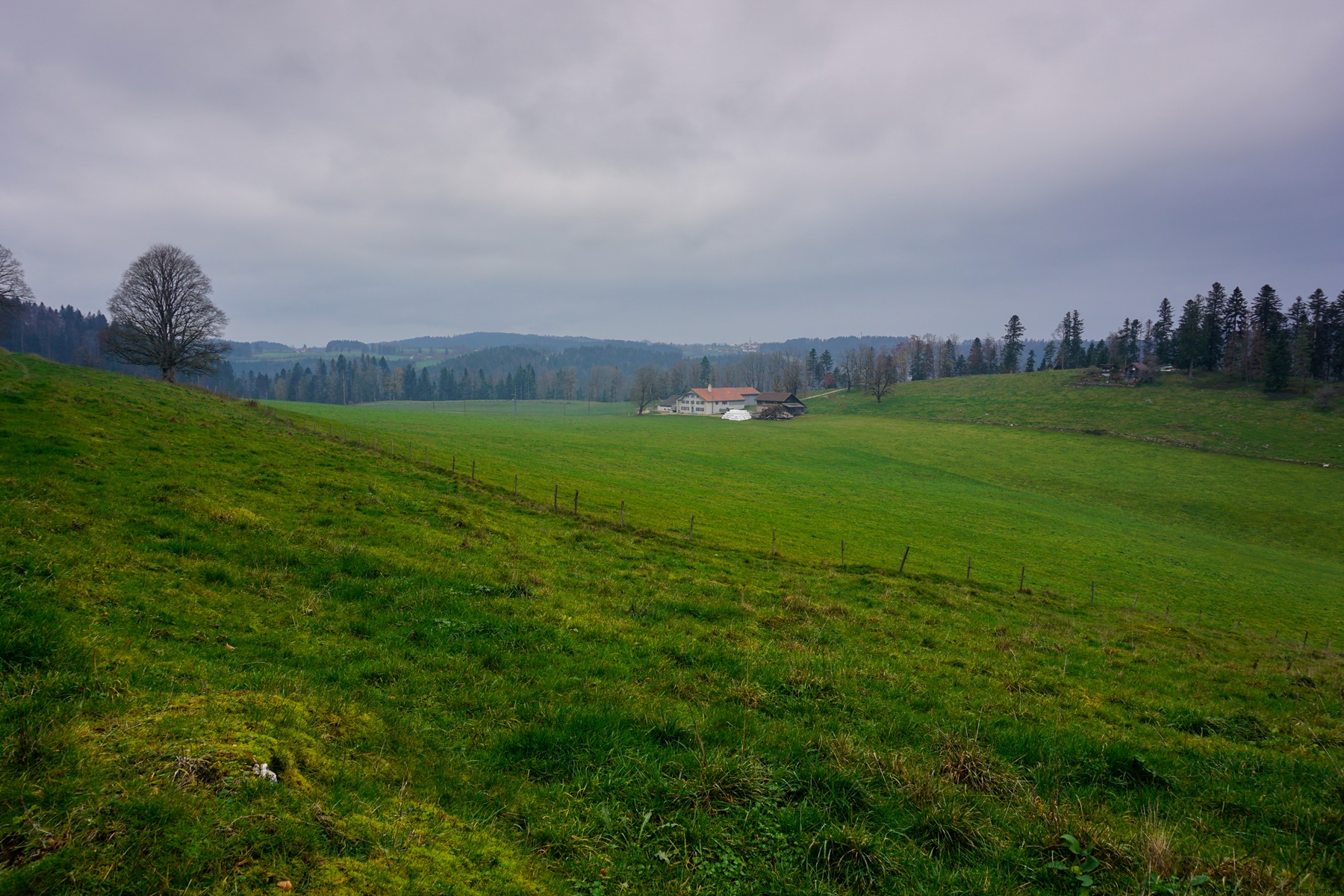
Au sortir des échelles on peut poursuivre en direction du Cul des Prés et, au-delà, monter soit aux Bois, soit à la Ferrière. Ici, j’avais décidé d’emprunter un bon chemin menant au Bas des Brandt. A partir de cette ferme, il m’était alors facile de suivre un bon chemin descendant en direction du Doubs et gagnant la rive de celui-ci au pont de Biaufond.
Itinéraire : Biaufond – Combe de Biaufond – Cul des Prés – Bas des Brandt – Biaufond
Distance : 6,5Km
Dénivellation : 350m
Durée : 2h30
[:en]
Biaufond is a surprising place. At the same time, it is an idyllic place renowned for years as a destination for a walk during summer. As well, it is a place steeped in history and which experienced unusual moments during the last war.
Moreover, many people are unaware that after the creation of the canton of Jura in 1978, the common border between this canton and the canton of Neuchâtel, represents only a distance of 250m. This common border is in fact a very small section between the canton of Bern and France. If one is in Biaufond and look beyond the homonymous lake, one will notice a boundary stone in the middle of the water. This milestone marks the border between France and Switzerland. Why is it in the middle of the water? One has to go back in time (to the beginning of the 20th century) to realize that the construction of the Refrain dam, inaugurated in 1909, considerably changed the appearance of the Doubs at this location. Indeed, where Lac de Biaufond is currently located, this river flowed some 10m lower than the current water level.
Biaufond is also at the end of the homonymous vale which is nothing other than the valley dug by La Ronde, the stream flowing from La Chaux-de-Fonds. One must use the imperfect because, even if it is certain that it was this stream that dug this valley, the current flow of the water is not clearly established. A few coloring trials had been carried out in the middle of the last century, but with contradictory results.
A path goes up the Combe de Biaufond. This one is, unlike the paths in the region, marked as a mountain path (therefore mark-signed in white-red-white). In addition, at each end of the Combe de Biaufond trail, a warning sign has been posted calling for caution. It is also specified that the path is reserved for people who are free from vertigo. Even if the warning may seem exaggerated, it makes sense considering that most of the other surrounding trails are pedestrian paths that do not require special skills. It is therefore understandable that it is sought to prevent inexperienced practitioners from venturing on this trail.
Leaving from Biaufond, the Combe de Biaufond trail runs a section alongside La Ronde, which at the end of the Lac de Biaufond forms a small body of water. The path, at the beginning, does not present any marked uneven ground. It is only when the gorge changes direction that one finds oneself faced with a few ladders and bridges to overcome the first lock. From this point, the path becomes a little more uneven, changes the bank of the valley and climbs towards a cave whose entrance arch can be seen from afar. After the cave, one changes banks again before reaching a very devastated-looking section of the gorge. There are felled trees and blocks of rock piled up pell-mell and it is difficult to understand whether the devastation is the result of a landslide or if, on the contrary, trees have been felled, which has favored erosion. After two small bridges and a change of bank, one reaches a basin from which one can clearly see the continuation: high ladders allowing one to get out of the gorge.
The exit from the gorge by the ladders is made necessary because, higher up, an old landslide has completely devastated the valley. It is this landslide that is at the origin of the Cul des Prés lake. This body of water is very variable in level and, depending on the year and the season, one can see water almost as up as La Planche.
On leaving the ladders one can continue in the direction of the Cul des Prés and, beyond, climb either to the Bois or to the Ferrière. Here, I had decided to take a good path leading to the Bas des Brandt. From this farm, it was then easy for me to follow a good path descending in the direction of the Doubs and reaching the bank of it at the Biaufond bridge.
Itinerary: Biaufond – Combe de Biaufond – Cul des Prés – Bas des Brandt – Biaufond
Distance: 6.5km
Altitude gain: 350m
Duration: 2h30
[:de]
Biaufond ist ein überraschender Ort. Gleichzeitig ist es ein idyllischer Ort, der im Sommer seit Jahren als Wanderziel bekannt ist. Gleichzeitig ist es ein geschichtsträchtiger Ort, der im letzten Weltkrieg ungewöhnliche Momente erlebt hat.
Ausserdem ist vielen nicht bewusst, dass nach der Gründung des Kantons Jura im Jahr 1978 die gemeinsame Grenze zwischen diesem Kanton und dem Kanton Neuenburg nur 250 m beträgt. Diese gemeinsame Grenze stellt einen sehr kleinen Abschnitt zwischen dem Kanton Bern und Frankreich dar. Wenn man sich in Biaufond befindet und über den gleichnamigen See hinausblickt, wird man einen Grenzstein in der Mitte des Wassers bemerken. Dieser Meilenstein markiert die Grenze zwischen Frankreich und der Schweiz. Warum ist er mitten im Wasser? Man muss die Zeit zurückgehen (Anfang des 20. Jahrhunderts), um zu verstehen, dass der Bau der 1909 eingeweihten Refrain-Staumauer der Fluss des Doubs an dieser Stelle stark verändert hat. Dort, wo sich heute der Lac de Biaufond befindet, floss dieser Fluss etwa 10 m niedriger als der aktuelle Wasserstand.
Biaufond liegt auch am Ende des gleichnamigen Erosionstals, das nichts anderes ist als das Tal, das von La Ronde gegraben wurde, dem Bach, der aus La Chaux-de-Fonds fliesst. Man muss das Imperfekt verwenden, denn selbst wenn sicher ist, dass dieser Bach dieses Tal gegraben hat, ist der aktuelle Fluss des Wassers nicht eindeutig festgestellt. Mitte des letzten Jahrhunderts wurden einige Färbeversuche durchgeführt, jedoch mit widersprüchlichen Ergebnissen.
Ein Weg geht die Combe de Biaufond hinauf. Dieser ist, anders als die Wege in der Region, als Bergweg (deshalb weiss-rot-weiss) markiert. Ausserdem wurde an jedem Ende des Wanderwegs Combe de Biaufond ein Warnschild angebracht, das zur Vorsicht auffordert. Es wird auch hingewiesen, dass der Weg schwindelfreien Personen vorbehalten ist. Auch wenn die Warnung übertrieben erscheinen mag, macht sie Sinn, wenn man bedenkt, dass die meisten anderen umliegenden Wege Fusswege sind, die keine besonderen Fähigkeiten erfordern. Es ist daher verständlich, dass man unerfahrene Wanderer davon abhalten will, sich auf diesen Weg zu wagen.
Von Biaufond aus führt der Wanderweg Anfangs der Combe de Biaufond entlang der La Ronde, die am Ende des Lac de Biaufond ein kleines Gewässer bildet. Der Weg weist zu Beginn keine ausgeprägten Geländeunebenheiten auf. Erst als die Schlucht ihre Richtung ändert, siegt man sich mit ein paar Leitern und Brücken konfrontiert, um die erste Schleuse zu überwinden. Ab hier wird der Weg etwas unebener, wechselt das Talufer und steigt auf eine Höhle zu, deren Eingangsbogen weithin sichtbar ist. Nach der Höhle wechselt mab erneut das Ufer, bevor man einen sehr verwüsteten Abschnitt der Schlucht erreicht. Es liegen gefällte Bäume und Felsblöcke durcheinander gestapelt und es ist schwer zu verstehen, ob die Verwüstung das Ergebnis eines Erdrutsches ist oder ob im Gegenteil Bäume gefällt wurden, was die Erosion begünstigt hat. Nach zwei kleinen Brücken und einem Uferwechsel erreicht man eine Mulde, von der aus man die Fortsetzung gut erkennen kann: hohe Leitern, die den Ausstieg aus der Schlucht ermöglichen.
Der Ausstieg aus der Schlucht über die Leitern ist notwendig, weil weiter oben ein ehemaliger Erdrutsch das Tal komplett verwüstet hat. Dieser Erdrutsch ist der Ursprung des Sees Cul des Prés. Dieses Gewässer ist sehr unterschiedlich im Pegel und je nach Jahr und Jahreszeit kann man Wasser fast bis La Planche sehen.
Wenn man die Leitern verlässt, kann man in Richtung Cul des Prés weitergehen und dahinter entweder zu den Bois oder zur Ferrière aufsteigen. Hier hatte ich mich entschieden, einen guten Weg zu folgen, der zum Bas des Brandt führt. Von diesem Hof aus konnte ich dann leicht einem guten Weg folgen, der in Richtung Doubs absteigt und bei der Biaufond-Brücke an dessen Ufer ankommt.
Route: Biaufond – Combe de Biaufond – Cul des Prés – Bas des Brandt – Biaufond
Distanz: 6,5 km
Höhenunterschied: 350m
Dauer: 2h30
[:]

Article précédent
Article suivant