Téléphone : +41 22 757 67 57 frontdesk@dev.destination-montagne.ch

[:fr]Le Mont Vully[:en]Mont Vully[:de]Mont Vully[:]

[:fr]

Avant de parler de la randonnée effectuée ce jour-là, il faut préciser un point par rapport à cette destination. Le Vully est d’abord une région couvrant les deux cantons de Fribourg et de Vaud. C’est ainsi que lorsque l’on fait référence aux vins du Vully, il s’agit toujours de savoir s’il s’agit du vignoble vaudois ou du fribourgeois. Le Vully est également une colline appelée Mont Vully, colline qui est chargée d’histoire et de légendes. Historiquement, le Mont Vully a été occupé dès le mésolithique et a été utilisé jusque dans l’histoire moderne à cause de sa position stratégique. Le Mont Vully est également le lieu d’un certain nombre de légendes puisque l’on prétend qu’à son sommet avaient lieu des « chettes », donc des sabbats de sorciers.

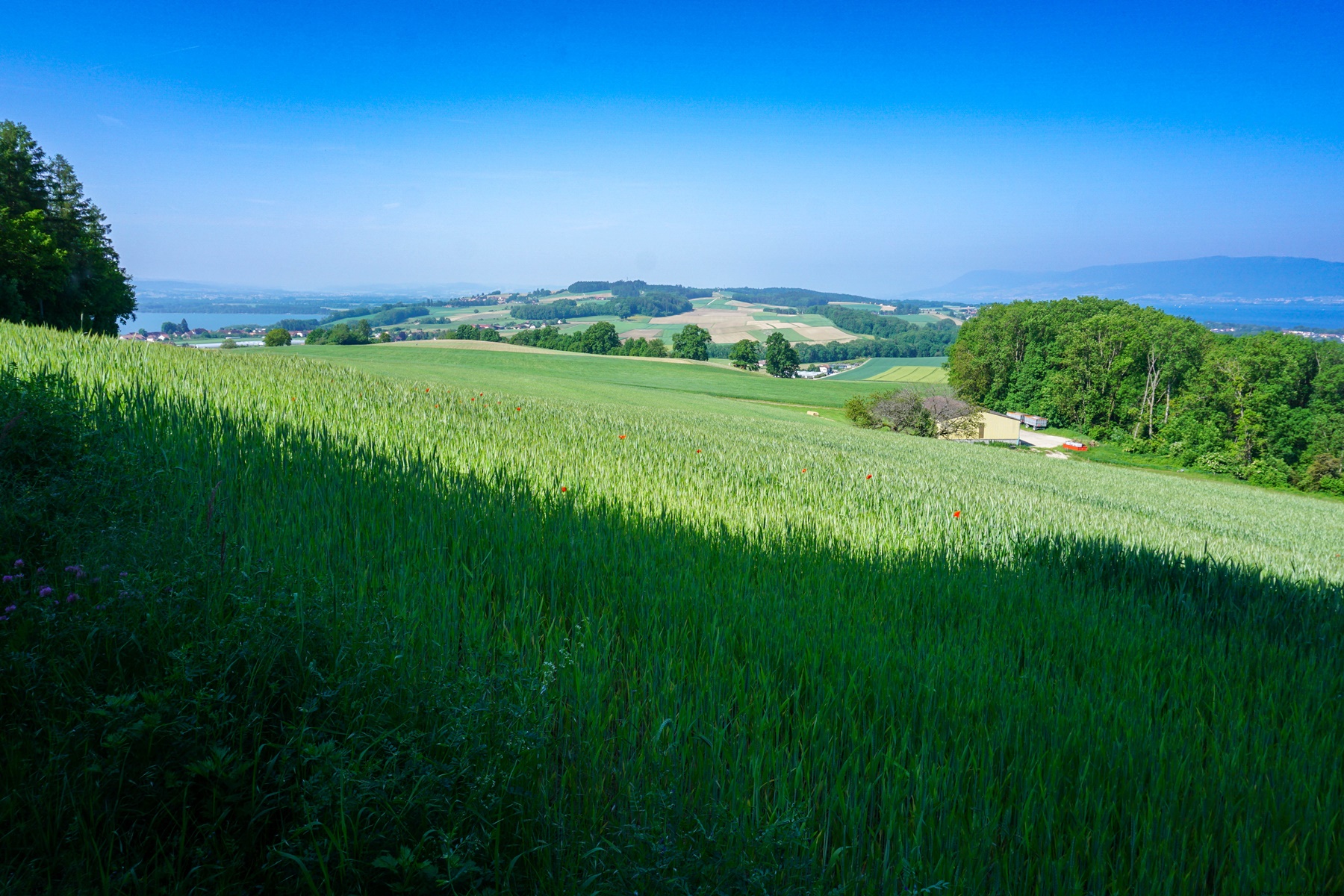
Situé entre les lacs de Morat et de Neuchâtel, le Mont Vully, malgré le fait qu’il soit d’altitude modeste, offre de beaux points de vue sur les Alpes et le Jura. De plus, les curiosités qui s’y trouvent permettent d’effectuer de jolies randonnées à la fois contemplatives et culturelles.

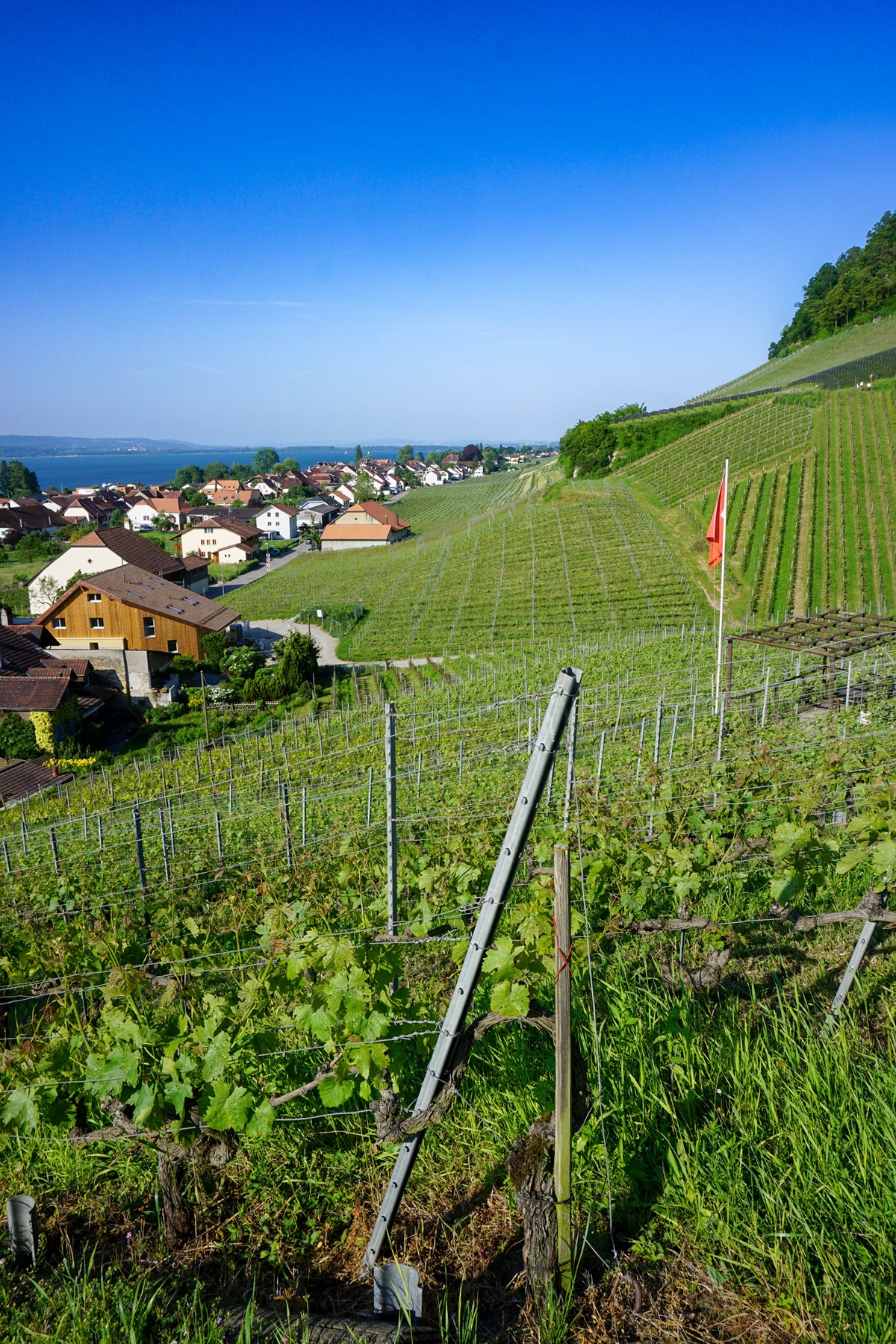
Le point de départ idéal pour cette randonnée se trouve à Sugiez que l’on peut facilement atteindre en train. Depuis la gare, il suffit alors de traverser le Canal de la Broye pour atteindre le centre du village. C’est depuis le centre que commence l’ascension du Mont Vully. Il s’agit pour cela de monter d’abord dans le vignoble pour traverser à flanc de coteau et rejoindre la petite combe du Vau de Nant.

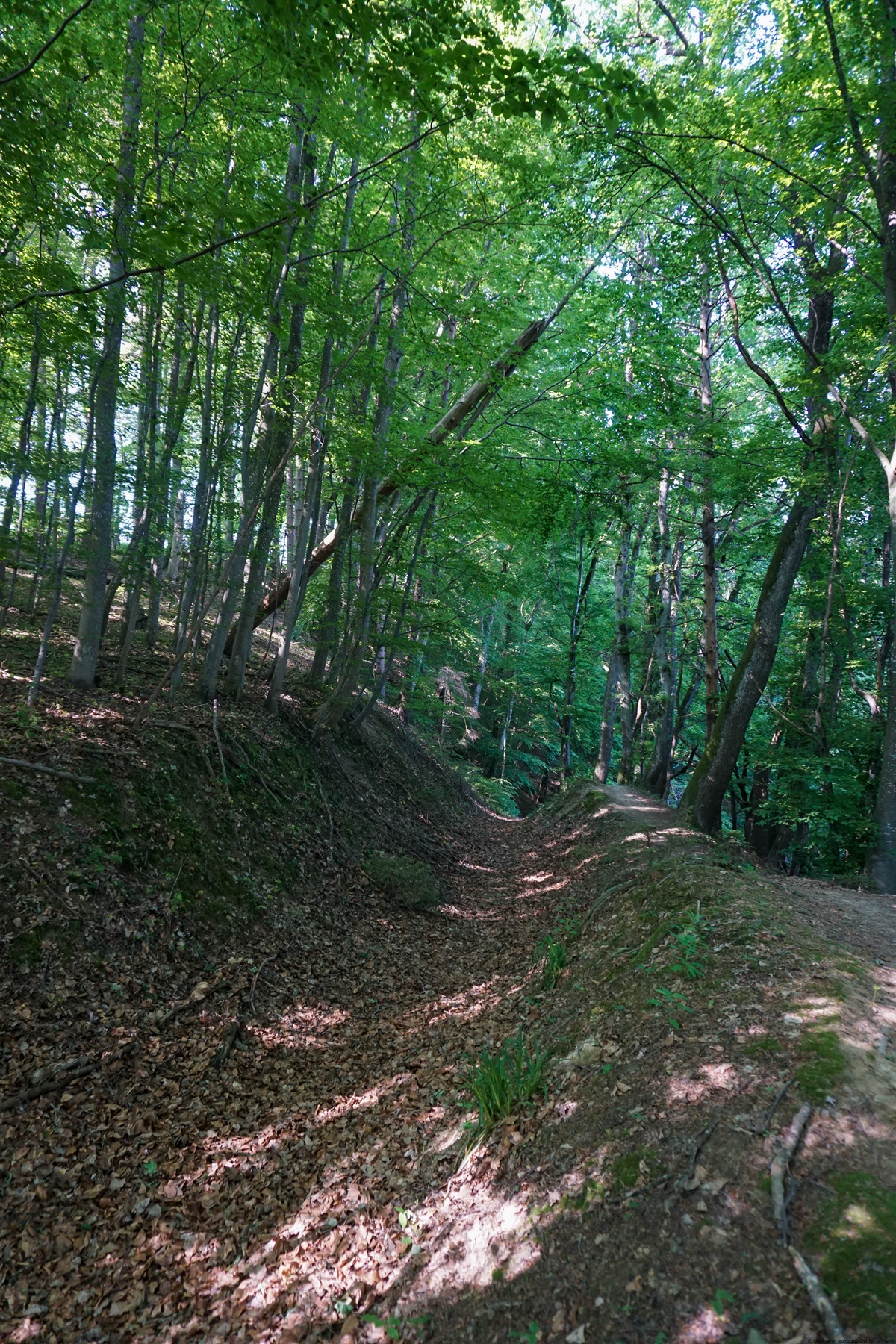
A partir de là, on continue en direction de Plan Châtel en traversant par alternance des prés et des forêts. A Plan Châtel, on se trouve non loin du point culminant. Le toponyme de Plan Châtel n’est pas tout à fait surprenant, puisque qu’un oppidum helvète se trouvait au sommet de la colline. A cet endroit, on bénéficie en effet d’une vue panoramique sur toute la région. Et ce d’autant plus qu’il faut s’imaginer qu’aux temps reculés, il ne devait pas y avoir d’arbres cachant la vue. C’est également la raison pour laquelle l’endroit a été aménagé durant les deux dernières guerres mondiales. Aménagé, ou réaménagé, faudrait-il dire, puisque les travaux ont dû, par endroits bouleverser les vestiges anciens. Mais qui se souciait alors de l’histoire ancienne ?

Pour la suite de la randonnée, il faut suivre les indications et les balises pour aller en direction de Cudrefin. On doit alors suivre un tronçon de la route goudronnée avant de plonger dans la forêt. On traverse ensuite à flanc de coteau dans les sous-bois pour rejoindre la Pierre Agassiz. Ce bloc erratique est également nommé le « Palet Roulant ». En effet, comme dans beaucoup de légendes similaires, ce gros bloc ferme l’entrée d’un monde souterrain, ou d’un trésor en d’autres lieux, bloc qui ne se déplace pour dégager l’ouverture qu’à un moment précis (pleine lune, veillée de Noël, …) et durant un court moment. Gare à celui qui s’y aventurerait et s’y attarderait trop longtemps. C’était, à l’époque, un moyen d’éduquer la population afin qu’elle ne se montre pas trop curieuse.

Après le bloc erratique, on continue un bout pour, plus loin, quitter l’itinéraire pour Cudrefin et monter en direction de la Fin des Fourches. Sur la colline, on atteint alors un site avec des explicatifs concernant les constructions datant de la première guerre mondiale. Même si les panneaux explicatifs, avec photos, laissent une impression de nonchalance, il ne faudrait pas oublier que l’on se souciait peu du confort de la troupe à l’époque. Même si une majeure partie de la troupe était issue d’un milieu rural et pauvre, les conditions de vie qu’il leurs était imposées, feraient scandale aujourd’hui. N’y voyez pas de regrets dans mes propos, mais je pense encore à mes ancêtres qui avaient été mobilisés.

Après avoir entamé la descente et traversé la route, on passe devant les « Grottes des Roches Grises ». Ces grottes sont en fait des restes de fortifications qui avaient été taillées dans le grès durant la première guerre mondiale. On peut s’y aventurer et observer les travaux qui avaient été effectués durant cette période. Après être descendu un chemin raide et raboteux, on rejoint le chemin traversant le vignoble à flanc de coteau. Il suffit alors de suivre celui-ci pour retrouver l’itinéraire de départ.

Itinéraire : Sugiez (débarcadère) – Vau de Nant – Plan Châtel – Mont Vully – Pierre Agassiz (ou Palet Roulant) – Grottes des Roches Grises – Les Cutres – Sugiez (débarcadère)
Distance : 10,5Km
Dénivellation : 380m
Durée : 3h30

[:en]

Before talking about the hike of that day, I must clarify a point in relation to this destination. The Vully is first and foremost a region covering the two cantons of Fribourg and Vaud. This is why when one refers to the wines of Vully, it is always a question of knowing if it is about the vineyard of Vaud or Fribourg. The Vully is also a hill called Mont Vully, a hill that is steeped in history and legends. Historically, Mont Vully has been occupied since the Mesolithic period and has been used until modern history because of its strategic position. Mont Vully is also the place of a certain number of legends since it is claimed that at its summit took place « chettes », therefore witches dances.

Located between the lakes of Morat and Neuchâtel, Mont Vully, even though it is of modest altitude, offers beautiful views of the Alps and the Jura. In addition, the curiosities that are present allow one to make beautiful hikes that are both contemplative and cultural.

The ideal starting point for this hike is in Sugiez, which can easily be reached by train. From the station, all you must do is cross the Canal de la Broye to reach the center of the village. It is from the center that the ascent of Mont Vully begins. For this, you must first climb through the vineyard to cross the hillside and reach the small valley of Vau de Nant.

From there, continue towards Plan Châtel, crossing meadows and forests alternately. At Plan Châtel, you are not far from the highest point. The toponym of Plan Châtel is not entirely surprising, since an oppidum from Helvetians was at the top of the hill. From this place, you benefit from a panoramic view of the entire region. And even more so since you must imagine that in remote times, there must not have been any trees hiding the view. This is also the reason why the place was developed during the last two world wars. Fitted out, or refitted, one would have to say, since the work had to upset the old vestiges in places. But who cared about ancient history then?

For the rest of the hike, you must follow the indications and the mark signs to go in the direction of Cudrefin. We must then follow a section of the paved road before plunging into the forest. You then cross the hillside in the undergrowth to reach Pierre Agassiz. This erratic block is also called the “Palet Roulant”. Indeed, as in many similar legends, this large block closes the entrance to an underground world, or to a treasure in other places, a block which only moves to clear the opening at a specific moment. (Full moon, Christmas Eve, …) and for a short time. Beware of anyone who ventures into there and lingers too long. It was, at the time, a way of educating the population so that they would not be too curious.

After the erratic block, continue for a bit to, further on, leave the route for Cudrefin and climb towards the Fin des Fourches. On the hill, we then reach a site with explanations concerning the constructions dating from the First World War. Even if the explanatory panels, with photos, leave an impression of nonchalance, we should not forget that they did not care much about the comfort of the troop at the time. Even if a major part of the troop came from a rural and poor environment, the living conditions imposed on them would cause scandal today. Do not see any regrets in my words, but I still think of my ancestors who had been mobilized.

After starting the descent and crossing the road, you pass in front of the “Grottes des Roches Grises”. These caves are in fact the remains of fortifications that had been carved out of sandstone during the First World War. You can venture in there and observe the work that was carried out during this period. After descending a steep and rugged path, you reach the path crossing the vineyard on the hillside. It is then enough to follow this one to find the route of departure.

Itinerary: Sugiez (landing stage) – Vau de Nant – Plan Châtel – Mont Vully – Pierre Agassiz (or Palet Roulant) – Grottes des Roches Grises – Les Cutres – Sugiez (landing stage)
Distance: 10.5km
Altitude gain: 380m
Duration: 3h30

[:de]

Bevor wir über die Wanderung an diesem Tag sprechen, müssen wir einen Punkt in Bezug auf dieses Ziel klären. Das Vully ist in erster Linie eine Region, die sich über beiden Kantone Freiburg und Waadt erstreckt. Deshalb geht es bei Weinen aus Vully immer darum zu wissen, ob es sich um Waadtländer oder Freiburger Weinberge handelt. Der Vully ist auch ein Hügel namens Mont Vully, ein Hügel voller Geschichten und Legenden. Historisch gesehen ist der Mont Vully seit der Mittelsteinzeit besiedelt und wurde aufgrund seiner strategischen Lage bis in die Neuzeit genutzt. Der Mont Vully ist auch der Ort einiger Legenden, da auf seinem Gipfel angeblich „Chettes“, also Hexentänze, stattfanden.

Der Mont Vully liegt zwischen dem Murtensee und dem Neuenburgersee und bietet trotz seiner bescheidenen Höhe eine wunderschöne Aussicht auf die Alpen und den Jura. Darüber hinaus ermöglichen die dortigen Kuriositäten schöne Wanderungen, die sowohl besinnlich als auch kulturell sind.

Der ideale Ausgangspunkt für diese Wanderung liegt in Sugiez, das bequem mit der Bahn erreichbar ist. Vom Bahnhof aus müssen Sie nur den Canal de la Broye überqueren, um ins Dorfzentrum zu gelangen. Vom Zentrum aus beginnt der Aufstieg zum Mont Vully. Dazu müssen Sie zunächst durch den Weinberg aufsteigen, den Hang queren und das kleine Tal von Vau de Nant erreichen.

Von dort aus geht es weiter in Richtung Plan Châtel, wobei wir abwechselnd Wiesen und Wälder durchqueren. Am Plan Châtel sind Sie nicht weit vom höchsten Punkt entfernt. Der Ortsname Plan Châtel ist nicht ganz überraschend, da sich auf dem höchsten Punkt des Hügels ein Oppidum der Helvetier befand. Von hier aus profitieren Sie von einem Panoramablick über die gesamte Region. Und das umso mehr, als man sich vorstellen muss, dass in fernen Zeiten keine Bäume die Sicht verdeckt haben dürfen. Dies ist auch der Grund, warum auf dieses Ort, während der letzten beiden Weltkriege bebaut wurde. Ausgerüstet oder umgebaut, müsste man sagen, denn die Arbeiten mussten stellenweise die alten Überreste zerstören. Aber wen interessierte damals die antike Geschichte?

Für den Rest der Wanderung müssen Sie den Hinweisen und Markierungen folgen, um in Richtung Cudrefin zu gehen. Anschliessend müssen wir einem Abschnitt der asphaltierten Strasse folgen, bevor wir in den Wald eintauchen. Anschliessend queren Sie den Hang im Unterholz, um Pierre Agassiz zu erreichen. Dieser Findling wird auch „Palet Roulant“ genannt. Tatsächlich verschliesst dieser grosse Block, wie in vielen ähnlichen Legenden, den Eingang zu einer unterirdischen Welt, oder zu einem Schatz an anderen Orten, ein Block, der sich nur zu einem bestimmten Zeitpunkt bewegt, um die Öffnung freizugeben. (Vollmond, Heiligabend, …) und zwar für kurze Zeit. Hüten diejenigen sich vor allen, die sich dorthin wagen und zu lange verweilen. Damals war es eine Möglichkeit, die Bevölkerung zu erziehen, damit sie nicht zu neugierig wurde.

Nach dem Findling geht es noch ein Stück weiter, um schliesslich den Weg nach Cudrefin zu verlassen und in Richtung Fin des Fourches aufzusteigen. Auf dem Hügel erreichen wir dann eine Stelle mit Erläuterungen zu den Bauten aus dem Ersten Weltkrieg. Auch wenn die erklärenden Tafeln mit Fotos einen Eindruck von Lässigkeit hinterlassen, sollten wir nicht vergessen, dass der Komfort der Truppe damals wenig am Herzen lag. Selbst wenn ein Grossteil der Truppe aus einem ländlichen und armen Milieu stammte, würden die ihnen auferlegten Lebensbedingungen heute einen Skandal hervorrufen. Ich sehe in meinen Worten kein Bedauern, aber ich denke immer noch an meine Vorfahren, die mobilisiert wurden.

Nachdem Sie den Abstieg begonnen und die Strasse überquert haben, kommen Sie an den „Grottes des Roches Grises“ vorbei. Bei diesen Höhlen handelt es sich tatsächlich um Überreste von Befestigungsanlagen, die während des Ersten Weltkriegs im Sandstein gehauen wurden. Sie können sich dorthin begeben und die Arbeiten beobachten, die in dieser Zeit durchgeführt wurden. Nachdem Sie einen steilen und schroffen Weg hinabgestiegen sind, erreichen Sie den Weg, der den Weinberg am Hang quert. Es reicht dann aus, dieser zu folgen, um die Abfahrtsroute zu finden.

Route: Sugiez (Anlegebrücke) – Vau de Nant – Plan Châtel – Mont Vully – Pierre Agassiz (oder Palet Roulant) – Grottes des Roches Grises – Les Cutres – Sugiez (Anlegebrücke)
Distanz: 10,5 km
Höhenunterschied: 380m
Dauer: 3h30

[:]

Laisser un commentaire

Votre adresse e-mail ne sera pas publiée. Les champs obligatoires sont indiqués avec *